
Coloring and Fine Motor Skills: What Parents Can Realistically Expect
Search for "coloring" and "fine motor skills" and you'll find big promises: better handwriting, stronger hands, a head start at school. Some of it is true, and some of it is stretched. As a parent, you deserve a clear picture of what coloring can do, what it can't, and how to make the most of it without turning playtime into homework.
This guide covers what fine motor skills are, the typical milestones that show up with crayons and pencils, simple ways to support your child, and signs that it's worth asking a professional. It's general information for families, not medical advice.
01The short answer
- Coloring is good practice. It gives small hands a reason to grip, press, steer and stop.
- It isn't a cure or a guarantee. It's one of many activities that build hand skills, alongside play, building and everyday tasks.
- Every child develops at their own pace. Age ranges are guides, not deadlines.
- Fun comes first. A child who enjoys coloring will do more of it, and more practice is what helps.
02What are fine motor skills?
Fine motor skills are the small, precise movements of the fingers, hands and wrists. They're what children use to hold a crayon, turn a page, fasten a button or snip paper with scissors. They grow from the bottom up: a steady body and shoulder first, then control of the arm and hand, then the fingers.
Coloring is a good example because it combines several skills at once. A child has to hold the tool, control how hard to press, move it in different directions, look at where it's going and decide when to stop.
03What coloring can do
Occupational therapists often use coloring as one of several activities to practice hand skills. Common benefits described in OT resources include:
- Grip practice. Holding a crayon or pencil encourages the thumb and fingers to work together.
- Hand strength and endurance. Pressing and moving a tool for a few minutes builds stamina over time.
- Eye-hand coordination. The child watches the tool and guides it toward a target.
- Control and boundaries. Learning where to stop is a gradual skill, and outlines give children something to aim for.
- Focus and calm. Many children settle into coloring, which can make it a good quiet-time activity.
Many therapists also see coloring as part of getting ready for handwriting, because the movements overlap. Even so, coloring alone doesn't guarantee neat writing later. It works best as one part of a varied day of play and practice.
04What coloring can't do
- It can't speed up development on a schedule. Hands and bodies mature at their own pace.
- It isn't a treatment for a developmental difficulty. A child with real challenges needs proper support from a professional, not just more coloring.
- It doesn't replace other movement. Climbing, playing with dough, building with blocks and getting dressed all build hand skills too.
- Neatness isn't the goal. Staying inside the lines comes later, and pushing too early can make coloring stressful.
05Typical milestones: what to expect and roughly when
The ages below are approximate and drawn from commonly used milestone guides and OT resources, including the CDC's developmental milestones. Children vary a lot, and a child who reaches a skill a little earlier or later is usually completely fine.
| Approximate age | What many children do with a crayon | How you can help |
|---|---|---|
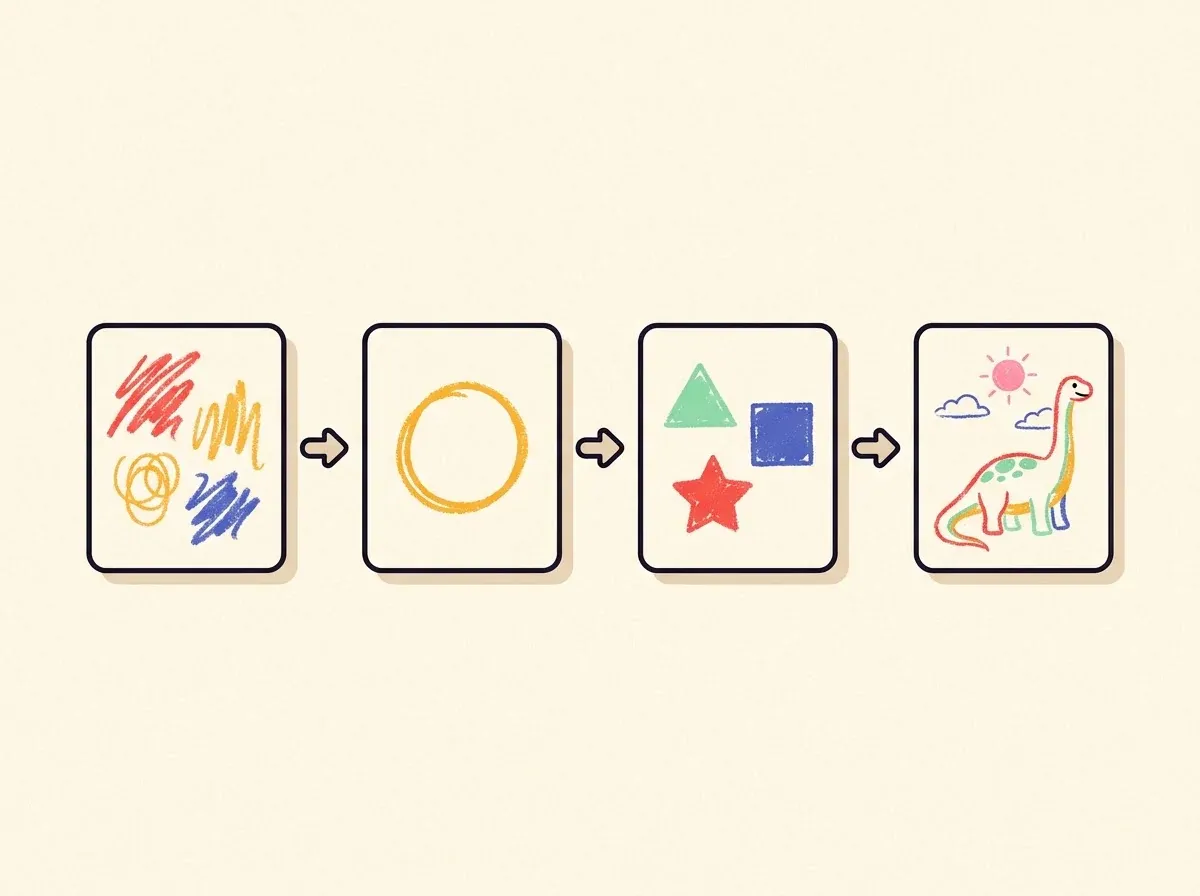
| 12-18 months | First scribbles, often with a whole-fist hold. Many still put crayons in their mouths. | Supervise closely and offer large paper |
| About 2 years | Scribbles on their own. Many begin to hold the crayon with thumb and fingers instead of a fist. | Offer short, chunky crayons and lots of free scribbling |
| About 3 years | Can often copy a circle once shown how. Control of direction improves. | Draw circles and lines together, then let them try |
| About 4 years | Better control of lines and shapes. Stays closer to outlines. | Use thick-outline pages with large shapes |
| About 5 years | Many use a more mature pencil grip and begin to print their name. | Introduce pencils and gently increase detail |
06How a child's grip usually develops
Many occupational therapists describe grip as moving through stages as the hand matures:
- Whole-fist hold: the crayon is gripped in the palm, and the whole arm moves. This is typical for very young children.
- Fingers on the crayon: the thumb and fingers wrap around it, with more control from the hand.
- Early tripod-style grip: the thumb, index and middle fingers start working as a team.
- Mature tripod grip: a relaxed, efficient grip that suits handwriting. It usually settles somewhere around ages 4 to 6.
There's no need to correct your child's grip at every page. Offering the right tools and setup is usually more helpful than constant reminders.

07Simple ways to support your child
1. Set up the space
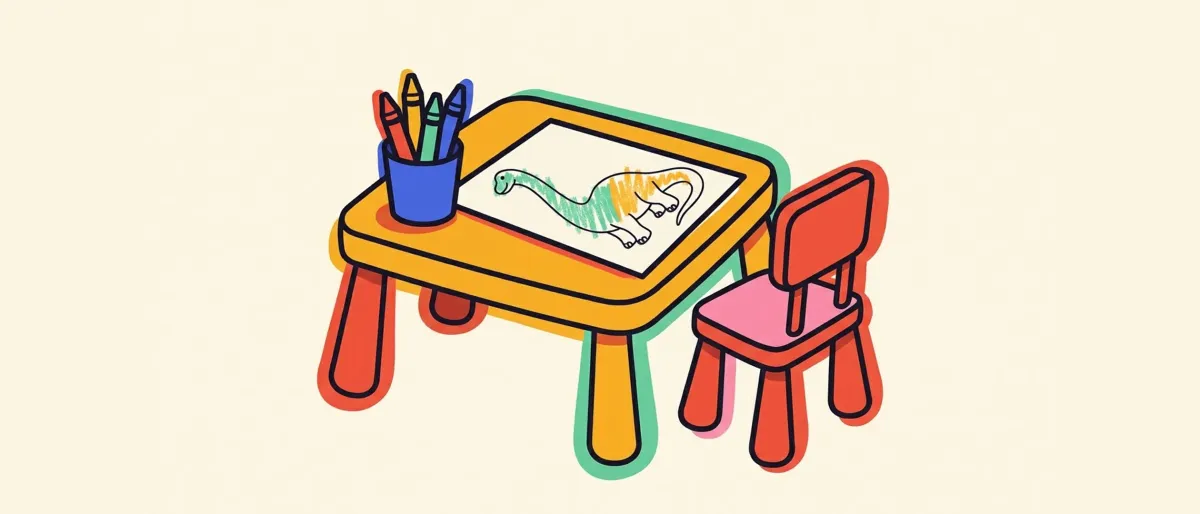
Many therapists suggest a table and chair that fit the child, with feet flat on the floor and the page at a comfortable height. A steady body makes it easier for the hand to work.
2. Try a vertical surface
Tape paper to a wall, an easel or a clipboard held upright. Coloring upward helps position the wrist and arm in a way many therapists like, and it's a fun change of pace for children.

3. Choose the right crayon size
Advice differs here, and both views have a point. Chunky crayons are easier for the youngest children to hold. Some therapists prefer shorter, thinner pieces for children who are ready, because very large barrels can encourage a whole-fist hold. Breaking a regular crayon in half is a free way to try the shorter size. See our guide to colored pencils, markers, crayons and gel pens for how each tool behaves.
4. Keep sessions short and frequent
Five to fifteen minutes a few times a week is often better than one long session. Small hands tire quickly, and a child who stops while still enjoying it will come back.
5. Pick pages that match the stage
Very thick outlines and large shapes suit younger children, and finer detail suits older ones. Our guide to choosing a coloring book by age has a simple age table.
6. Let your child lead
Praise effort and creativity, not neatness. A purple dinosaur that spills over the edge is a success. Pressure to stay inside the lines tends to make children avoid coloring, which is the opposite of what you want.
7. Mix in other hand activities
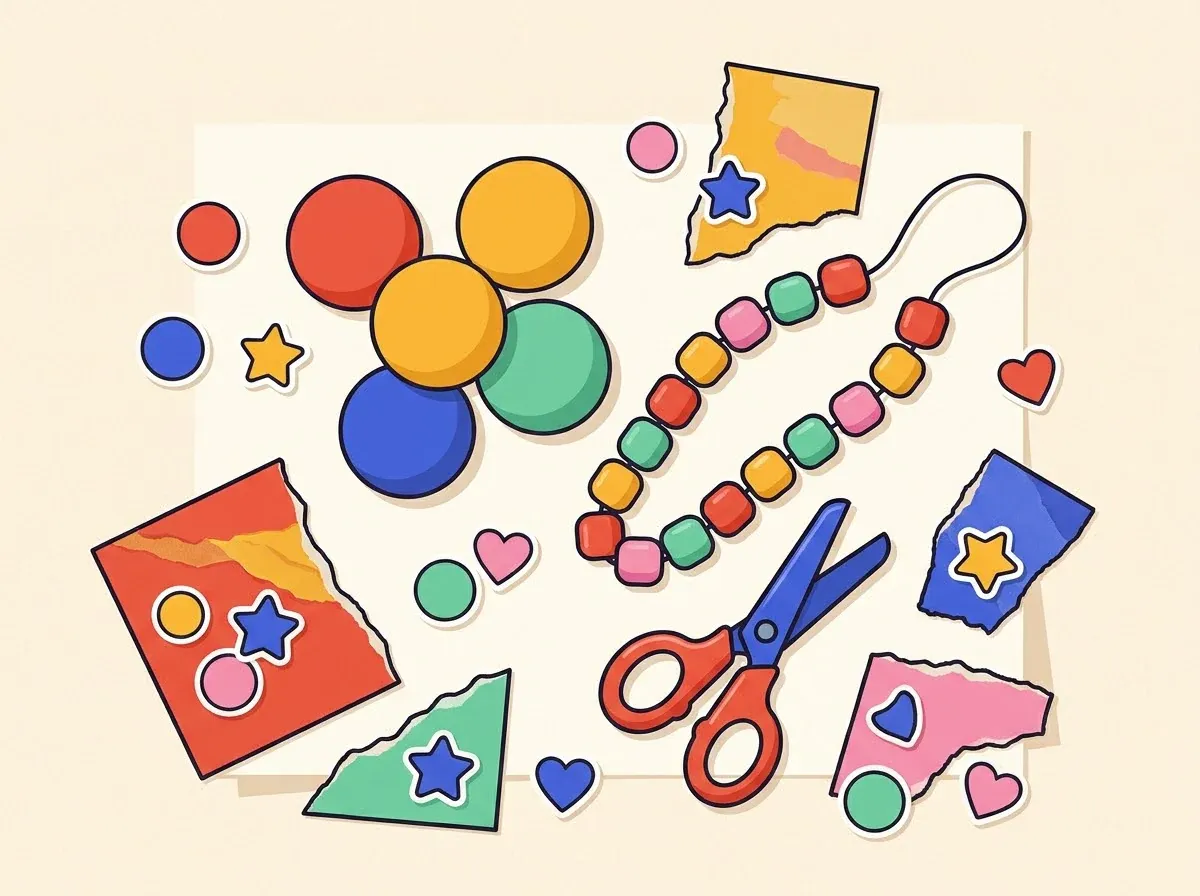
Coloring works best alongside other hand-building play:
- Playing with dough or clay: squeezing, rolling and pinching
- Tearing and crumpling paper
- Threading large beads or pasta
- Using child-safe scissors to snip paper
- Stickers, building blocks and peg boards
08Making printed pages work well for little hands
Thick, dark lines are easier to see and aim for. Print at full size on slightly heavier paper if you can, so crayons don't tear it. Our guide to printing coloring pages at home covers the settings that give the darkest, clearest lines.

09When to talk to a professional
Most children who are slow to color neatly are simply on their own timeline. But it's worth mentioning to your child's doctor or an occupational therapist if you notice several of these over time, especially compared with other children of a similar age:
- Your child still holds a crayon in a tight fist well beyond the toddler years, or can't hold a crayon at all
- They avoid drawing, coloring and other hand activities almost completely
- Their hands tire or hurt after very short sessions
- They get very frustrated with simple fine motor tasks, such as buttons or snipping paper
- They seem to have lost a skill they used to have
Pediatric guidelines recommend regular developmental screening at routine check-ups, so bring up any concerns at those visits. You can also read the checkup guidance for ages 1 to 4 from the US health agency. This article can't diagnose anything, and one challenge on its own is rarely a cause for alarm. If you're unsure, asking is always fine.
010Common mistakes to avoid
| Mistake | Why it backfires | Try this instead |
|---|---|---|
| Insisting on staying inside the lines | Creates stress and avoidance | Celebrate effort and big shapes first |
| Correcting the grip constantly | Interrupts play and lowers confidence | Offer shorter crayons and a good setup |
| Comparing with other children | Children develop at different speeds | Compare only with their own progress |
| Long sessions | Tired hands and a bored child | Keep sessions short and frequent |
| Pages that are too detailed | Frustration and giving up | Choose thick lines and large shapes |
| Leaving young children unsupervised | Crayons and small pieces can be a hazard | Stay nearby with children under about 3 |
011Frequently asked questions
Does coloring improve handwriting?
Coloring gives practice in the movements and control that handwriting uses, and many therapists use it as part of building those skills. It isn't a guarantee on its own, so combine it with other hand play and, later, real writing practice.
What age should my child start coloring?
Many children begin scribbling with crayons around 15 to 18 months, under close supervision. Coloring becomes more purposeful through the preschool years.
Is it a problem if my child still uses a fist grip at age 2?
Not usually. Many children are still developing their grip at that age. If the fist grip continues well beyond the toddler years, mention it to your child's doctor or an occupational therapist.
Are markers or crayons better for fine motor skills?
Crayons and pencils need more pressure than markers, so many therapists find they give hands more to work with. Markers glide easily, which many children enjoy. A mix is fine.
Can digital apps replace paper coloring?
Tapping a screen is a different movement from holding and pressing a real tool. For hand skills, paper and crayons give more practice, which is another reason printable pages are useful.
012Ready to start?
Try a few pages first with our free sample set: get 5 free pages. When you want a whole book of bold, easy designs for little hands, the Cozy Dinosaur Coloring Book has thick outlines and big, friendly shapes, and you can reprint any page as often as you like. You can also browse the full shelf.
013Sources and further reading
- CDC: Developmental milestones
- US Office of Disease Prevention and Health Promotion: checkups for ages 1 to 4
- Occupational therapy resources on grasp development and coloring, from pediatric OT clinics and school-based therapists
This article is for general information only and isn't medical advice. If you have concerns about your child's development, talk to your pediatrician or an occupational therapist.