
How to Choose a Coloring Book by Age: A Simple Guide for Ages 2 to Adult
A coloring book that is too hard feels frustrating. One that is too easy feels boring. Either way, it ends up in a drawer. The good news is that picking the right one is simple once you know what to look for.
This guide explains what matters at each age, from toddlers to adults, and how to spot a good fit before you buy. Every child and every adult is different, so treat the age ranges as a starting point, not a rule.
01The four things that decide whether a book is a good fit
Before looking at ages, it helps to know what actually makes one coloring page easier than another:
- Line thickness. Thick outlines are easier to see and stay inside. Thin lines need more control.
- Shape size. Large open areas suit chunky tools and small hands. Small, tightly packed areas take patience and fine control.
- Level of detail. A single character on a plain background is simple. A full scene with patterns is more demanding.
- Page count and variety. More pages give more value, but only if the designs stay interesting from start to finish.
02Quick guide: what to look for by age
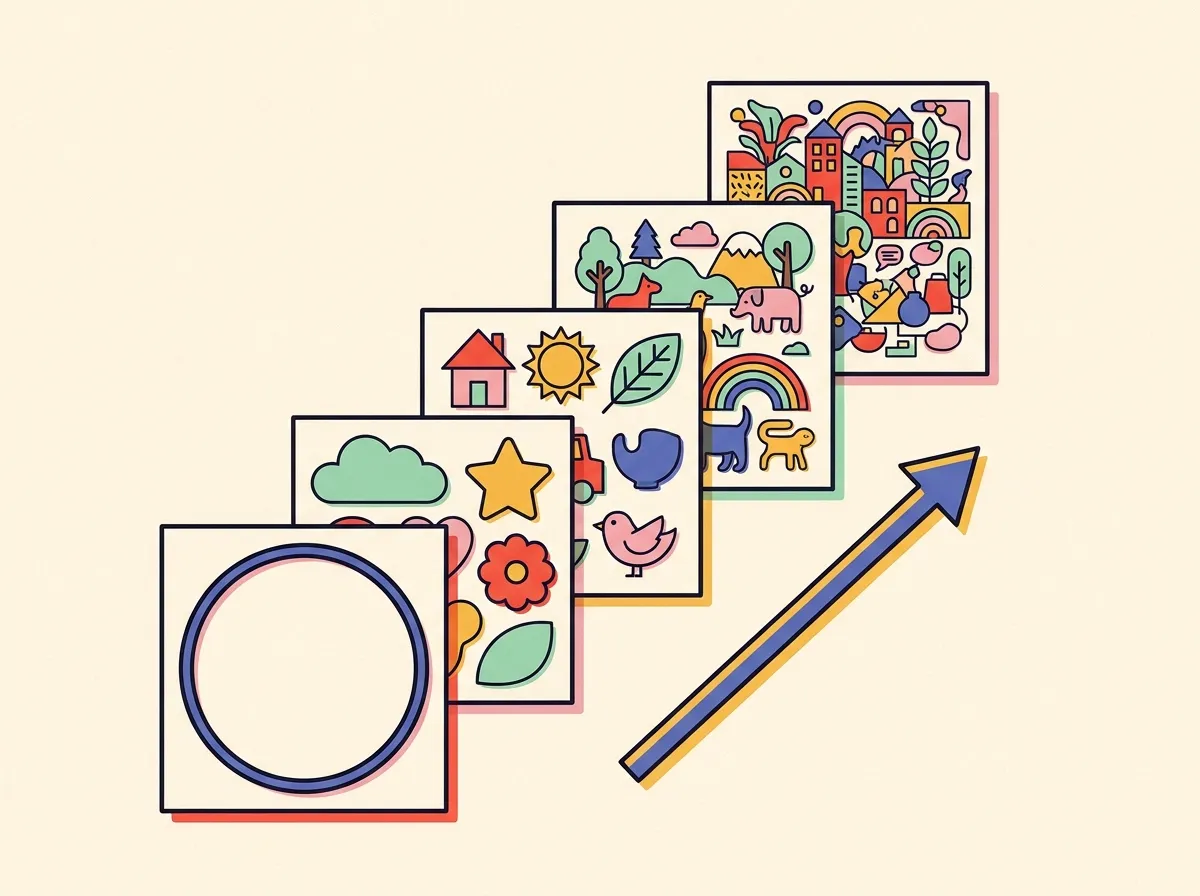
| Age | Line thickness | Shape size | Detail level | Best tool |
|---|---|---|---|---|
| 2-3 | Very thick | Very large | One simple subject | Jumbo crayons |
| 4-5 | Thick | Large | Simple, few elements | Crayons, washable markers |
| 6-8 | Medium to thick | Medium to large | Characters with a simple scene | Markers, pencils |
| 9-12 | Medium | Mixed sizes | More detail and patterns | Pencils, gel pens |
| Teens and adults | Any, by preference | Mixed, small allowed | Simple to intricate | Pencils, markers, gel pens |
| Older adults | Thick and clear | Large and open | Simple, easy to see | Pencils, soft markers |
Not sure which tools to buy? Our guide to colored pencils, markers, crayons and gel pens compares them for each age.
03Ages 2 to 3: toddlers
At this age, coloring is mostly about scribbling and enjoying the feel of the crayon. Staying inside the lines isn't the goal, and most toddlers won't try to.
What to choose:
- Very thick lines and very large shapes
- One simple subject per page, such as a ball, an apple or a single animal
- Plenty of white space
Tips: Use jumbo crayons, tape the page to the table so it doesn't slide, and keep sessions short. Always supervise young children and keep small pieces out of reach.
04Ages 4 to 5: preschoolers
Preschoolers start to color with more purpose. They enjoy choosing colors and are beginning to stay closer to the outlines, although neat coloring isn't expected yet.
What to choose:
- Thick outlines with large shapes
- Friendly animals, vehicles and everyday objects
- Simple pages with only a few separate areas to color
Tips: Washable markers and chunky crayons both work well. Let your child pick the colors, even when they're "wrong". A purple snowman is fine.
05Ages 6 to 8: early school years
Control improves quickly at this age. Many children enjoy characters, stories and scenes, and they start to care about how the finished page looks.
What to choose:
- Medium-to-thick lines with a mix of large and medium shapes
- Characters with a simple background or setting
- Themed books, such as animals, seasons or holidays, that keep interest across many pages
Tips: This is a good age to introduce colored pencils for details alongside markers for big areas. A themed book gives a sense of progress, which many children like.
Bold, easy pages in this range can be a good fit. For example, the Cozy Bear Coloring Book uses thick outlines and large, friendly shapes that suit this stage.

06Ages 9 to 12: older children
Older children are often ready for more detail and patterns. Many like to experiment with shading, gradients and mixing tools.
What to choose:
- Medium lines with a mix of large and small areas
- Scenes with more elements and some pattern work
- Fantasy, nature or adventure themes
Tips: Gel pens and a decent set of colored pencils are good upgrades. Try our simple shading ideas in a future guide, and let them choose designs they're proud of.
07Teens and adults
Teenagers and adults color for many reasons: to relax, to take a break from screens, or just to enjoy making something colorful. There's no single right level, so choose by preference.
What to choose:
- If you want a calm, easy session: bold designs with larger shapes you can fill without much planning.
- If you want a challenge: more detailed scenes with smaller areas and room for shading.
- Themes you actually like, such as fantasy, nature or cozy scenes
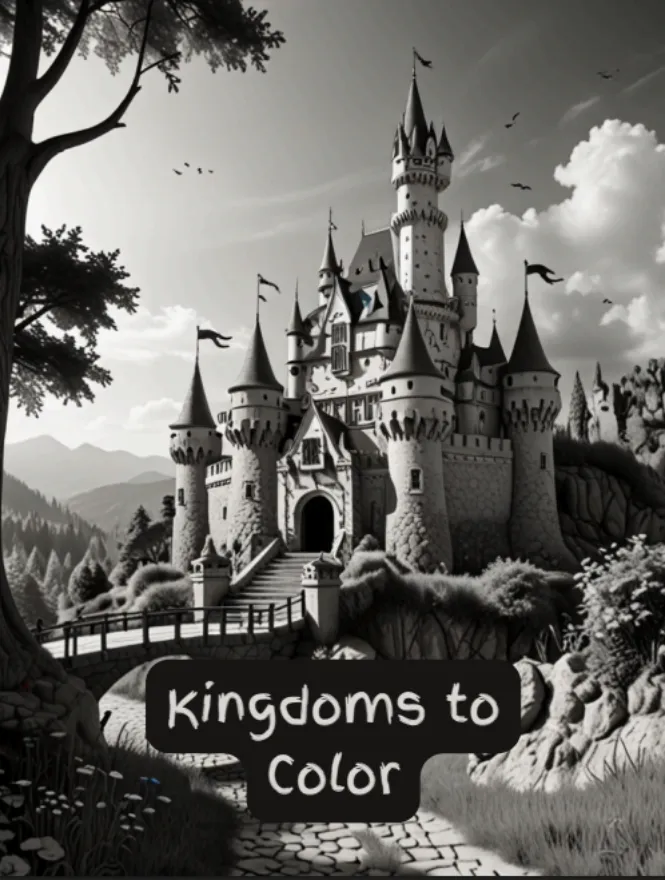
Our Kingdoms to Color book has 40 pages of castle and fantasy scenes made for adults who enjoy a themed, relaxed coloring session.
A note on expectations: Many people find coloring relaxing, but it isn't a medical treatment. Enjoy it as a hobby, not a cure.
08Older adults and seniors
For older readers, comfort and visibility matter most. Look for designs that are easy on the eyes and comfortable for the hands.
What to choose:
- Thick, dark outlines that are easy to see
- Large, open shapes that need less precise control
- Familiar themes, such as flowers, birds, seasons and gardens
Tips: Print pages at full size so lines are as bold as possible, and use a well-lit table. Soft, thicker pencils or markers can be more comfortable than thin pens. Our guide to printing coloring pages at home covers the settings that give the darkest, clearest lines.
09Signs a book is too hard or too easy
| Sign | What it usually means | What to try |
|---|---|---|
| Gives up after one page | Too difficult or too small a detail | Choose thicker lines and bigger shapes |
| Rushes through, looks bored | Too easy | Try more detail, new tools or a new theme |
| Gets upset about going outside the lines | Pressure to be neat | Switch to larger shapes and reassure them it's fine |
| Skips most of the pages | Theme doesn't match interests | Let them choose the next book |
| Enjoys it and asks for more | Good match | Keep going and add variety |
010Coloring with mixed ages
Families often have children of different ages coloring at once. Here are a few ways to make it work:
- Choose one book and let each person pick pages that suit their level.
- Give younger children the large, simple pages and older ones the busier pages.
- Let older children help younger ones choose colors, which keeps everyone involved.
- Print the same page for everyone and compare results at the end.
011Check before you buy
A short checklist helps you avoid a poor fit:
- Look at sample pages and check the line thickness and shape sizes.
- Check the page count and whether the designs vary.
- Choose a theme the person actually likes.
- Make sure you can print it. Digital books are printed at home, so check your paper and printer settings first.
- If unsure, try free pages before buying a full book.
012Frequently asked questions
What age is best to start coloring?
Many children start scribbling with large crayons around age 1 to 2, under supervision. Coloring becomes more purposeful around ages 3 to 4.
Is it okay if my child colors outside the lines?
Yes. Staying inside the lines is a skill that develops over time, and it isn't the point of coloring. Praise effort and creativity instead.
Are digital coloring books good for kids?
Digital downloads you print at home work well because you can reprint favorite pages and use any paper and tools. Children still color on paper, not on a screen.
Can adults enjoy "kids" coloring books?
Absolutely. Many adults prefer bold, simple designs because they're relaxing and easy to start. Choose by style, not by the label.
How many pages should a coloring book have?
There's no ideal number. Around 30 to 40 varied pages is a good amount for most people, as long as the designs stay interesting.
013Ready to find the right book?
Not sure where to begin? Try a few pages first: get 5 free pages. For kids, browse the Kids shelf. For adults, take a look at Kingdoms to Color. Every book is an instant PDF, and you can reprint any page as often as you like.